


Can be rolls up for packing Snap brim Loreto Ecuador Straw Panama Hat [Fast shipping and box packing]
Can be rolls up for packing Snap brim Loreto Ecuador Straw Panama Hat [Fast shipping and box packing]
BUNDLE & SAVE
Couldn't load pickup availability
![Can be rolls up for packing Snap brim Loreto Ecuador Straw Panama Hat [Fast shipping and box packing]](http://time-fashion.com/cdn/shop/files/5a28fa3f4cc4d7e4540d28f41b1ecf93.jpg?v=1775565295&width=500)
Can be rolls up for packing Snap brim Loreto Ecuador Straw Panama Hat [Fast shipping and box packing]
-
Ordered
- - -
Order Ready
- - -
Delivered
SHIPPING & RETURNS
SHIPPING & RETURNS
Delivery
Your order will be delivered FOR FREE to your home. It's important for us, to offer the shipping. Your package will be shipped in 24/48H.
Our International Delivery normally takes on average between 8 & 12 days. However, due to a very high demand recently, it can be a bit longer for some countries.
Returns
Yes, you can be refund. You can ask a refund during 30 days after the package receipt. If 30 days have elapsed since your purchase receipt, unfortunately we cannot offer you a refund or exchange.
To qualify for a return, your item must be unused and in the same condition as you received it. It must also be in the original packaging.
*Note: Before proceeding with a return, please read our entire Returns Policy.
PAYMENT INTERNATIONAL 100% SECURE
PAYMENT INTERNATIONAL 100% SECURE
All payments on this website are processed through major credit card platforms (Visa, MasterCard, American Express), PayPal, and other secure payment methods (depending on your region), offering 100% security. As industry leaders in online payments, these platforms operate independently of our servers, meaning we have no access to any of your information (including credit card numbers, bank account details, passwords, etc.). (Additional payment methods will be added in the future.)
Regarding Currency: Regardless of your currency, no taxes are incurred during currency conversion. All items on the Time-Fashion website are tax-free!
For inquiries, contact Please contact us by email at support@time-fashion.com. You'll receive a response within 10 seconds!
OUR GUARANTEES
OUR GUARANTEES
Global Insured Shipping: Every order includes real-time tracking details and insurance coverage in case your package is lost or stolen during transit.
Money-Back Guarantee: If your item becomes damaged or defective within 30 days of use, we'll gladly replace it or issue a refund.
24/7 Customer Support: Our team of live representatives is available 24 hours a day, 7 days a week to assist you and answer any questions.
Secure Checkout: We use state-of-the-art SSL encryption technology to ensure your personal and financial information is 100% protected.
With over 80,000 satisfied customers, your satisfaction is our goal.
We ship to over 150 countries and regions, including the United States, Canada, Australia, and all European countries.
After-Sales Service
Dear Customer, you may purchase any product here and try it at home for 30 days.
If you are not satisfied for any reason, you may return it within 30 days!

![Can be rolls up for packing Snap brim Loreto Ecuador Straw Panama Hat [Fast shipping and box packing]](http://time-fashion.com/cdn/shop/files/5a28fa3f4cc4d7e4540d28f41b1ecf93.jpg?v=1775565295&width=1445)
![Can be rolls up for packing Snap brim Loreto Ecuador Straw Panama Hat [Fast shipping and box packing]](http://time-fashion.com/cdn/shop/files/8d26a70fcfbacc85cbcbcbbdd41ac758_b77b9608-334e-4a99-a333-15a0095cc6ca.jpg?v=1775565295&width=1445)
HOW TO MEASURE FOR A HAT?
First, Measure Your Head Circumference
To measure your head circumference, take a sewing measuring tape or even a string, and wrap around above the ears and across your eyebrows. Please stick your finger under the tape so there is a little room and there you have head circumference! If you fall between measurements go for the next size up. Record your measurement in centimeters, if possible for the most accuracy. If you used a string, match it to a measuring tape.

HOW TO PROPERLY WEAR THE HATS WE PRODUCE
Traditional Craft, Modern Quality
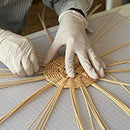 1. Crafted with Traditional Excellence
From hand-woven materials to steam shaping, each step reflects master craftsmanship
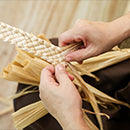 2. Handwoven with Precision
Using traditional weaving techniques, every hat is carefully crafted and meticulously finished

 3. From Material to Masterpiece
Each hat undergoes complete hand-weaving, steam shaping, and precision pressing processes
 4. Handcrafted Excellence Guaranteed
Selected natural materials go through weaving, shaping, and precision pressing to achieve perfect quality

MATERIAL SOURCING
The process begins with finding raw material. Optimo has a worldwide exclusive on sustainably sourced Canadian silver beaver felt from a supplier in Portugal and each year releases various
colors and weights for limited-edition collections. “Beaver is the ultimate fur to felt for a smooth-finish hat because of its tightness and feel,” Thompson says. “Traditionally, underbelly [fur] is known as the best of the best because the color is clearer and more vibrant once it’s dyed.” The fine fur is felted—a time-honored technique that binds the fibers together and produces a bell-shaped hat body—at the mill before being shipped to Chicago.

BLOCKING
The next step, called blocking, creates the initial structure. An inverted hat body is placed into a 1940s blocking machine that Thompson sourced from Germany. The material is then steamed, and a domed mold called a hat block is plunged into the felt, forcing it into the desired size and shape.

SLOW BAKE
The blocked hat body is put through a secondary blocking, called decatizing, in which it’s steamed again and then slowly “baked” in a decatizing machine. “I would liken it to a curing of the fabric,” Thompson says. “This process makes the felt more resistant to shrinkage and prevents the shape from being knocked out of it. Just to do that step is very expensive and requires a lot of additional molds.”

REST AND VACUUM
Once the hat passes inspection, it’s off to the trimming room. Here, a sheepskin sweatband is snipped to size and installed with a vintage Singer sewing machine. (Thompson finds the older models to be of higher quality.) The brim is cut, and the edges are either welted, bound, curled, or, in some cases, left raw. The treatment affects not only the look but also how the brim snaps and holds.

TRIMMING
Once the hat passes inspection, it’s off to the trimming room. Here, a sheepskin sweatband is snipped to size and installed with a vintage Singer sewing machine. (Thompson finds the older models to be of higher quality.) The brim is cut, and the edges are either welted, bound, curled, or, in some cases, left raw. The treatment affects not only the look but also how the brim snaps and holds.

IRONING THE BRIMSATIN LINING
Next comes the flanging bench, where the headwear is flipped upside down into a donut-looking mold called a flange—which corresponds to the desired size, brim width, and brim shape—and placed under a large, heated bag of sand. “It’s kind of an ingenious way to iron the brim,” Thompson says. “It sits under there for several minutes, and then we let it sufficiently cool.”

SATIN LINING
The piece is returned to the trimming room, where a satin lining is sewn inside the crown and a ribbon and bow are secured to the outside. “Most of our ribbon, we have specially produced for us,” Thompson says. “We’re fortunate enough to have a lot of vintage ribbon that was made in the 1930s, ’40s, and ’50s—the quality was more refined then.”
FINAL TOUCHES
Lastly, the hat undergoes a secondary flanging before arriving at the hatter’s bench for final finishing, including creasing, polishing, and gentle steaming to relax the fibers and bring out the colors. Each piece is thoroughly inspected before being placed into its hat box and shipped.
Use the table below to determine your hat size based on your measurements.